Engelberg
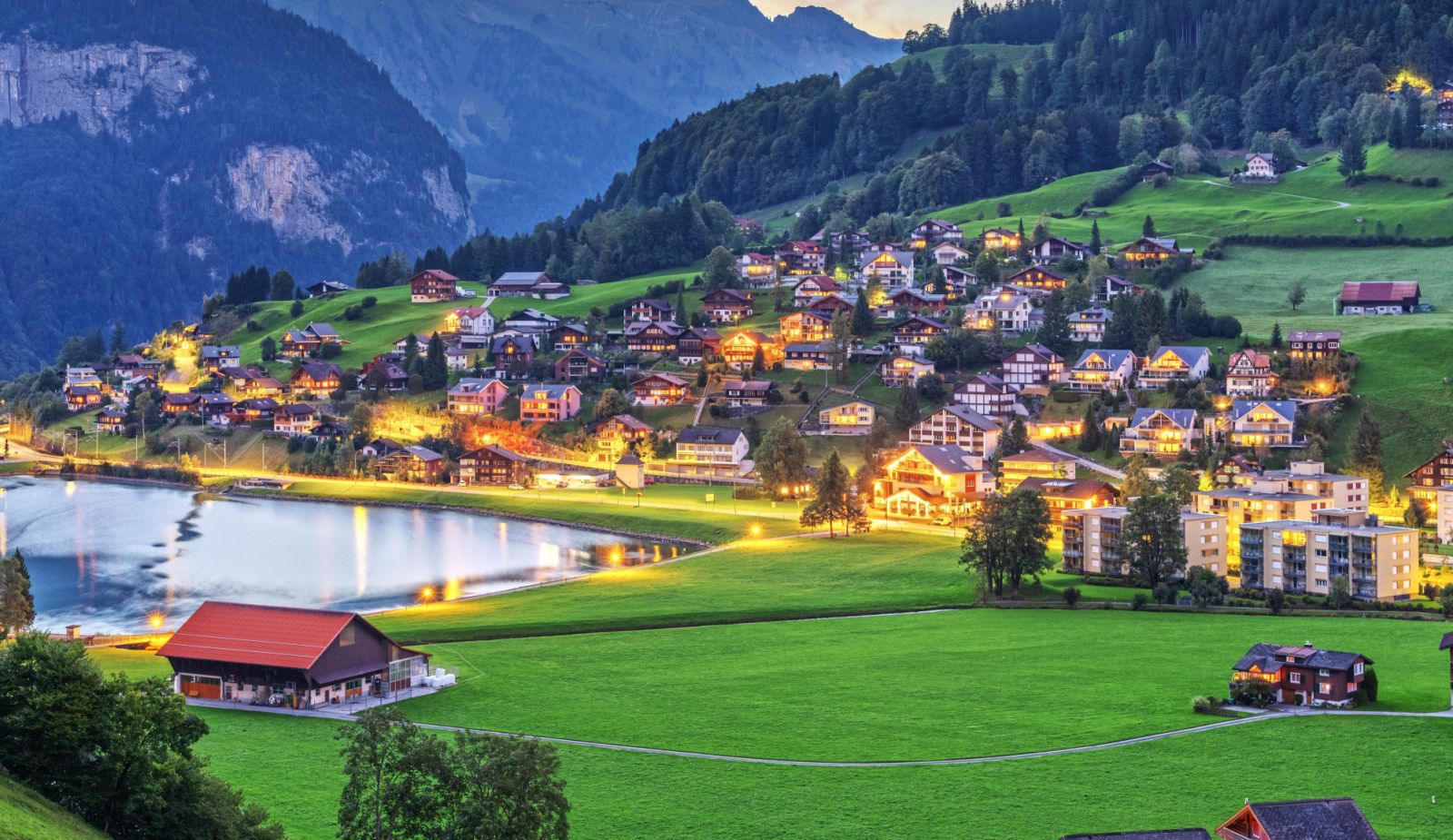
Central Switzerland Engelberg
Engelberg
Plan
Plan your trip
A handcrafted itinerary for Engelberg.
SleepFind your stay
A short, curated list. None of them a chain.
GuidesFollow a route
Hand-curated, walked before written.
Engelberg, Angel Mountain, occupies a high valley in the canton of Obwalden that closes at its southern end into the glacier and rock wall of Titlis. The village sits at 996 metres, low enough to feel sheltered, high enough to feel like the edge of something larger.
The Benedictine monastery at the centre of the village was founded in 1120 by Konrad von Sellenbüren; it's still active, still the architectural heart of the place, rebuilt in the Baroque style seen today after a fire destroyed the medieval complex in 1729. Monks lead guided tours through its library three times a week, and the Stiftsschule within its walls has boarded students since 1851. Alpine cheese has been made in the monastery's own dairy for generations, sold today in a small shop beside the gate.
Things worth slowing down for
A few of our favourite spots in Engelberg.
What makes Engelberg slow travel perfect
Engelberg is a base for two very different seasons. In summer, the valley draws serious hikers and the Titlis cable car, which reaches 3,020 metres and includes a rotating gondola and an ice cave that stays frozen year-round. The Rotair turns a full circle on its final ascent, the world's first cable car built to do so, and from the summit station a suspension bridge crosses open air at 3,041 metres, among the highest of its kind in Europe.
Hikers who want distance from the cable car crowds take the Four Lakes Hike instead, a route past Trübsee, Engstlensee, Tannensee, and Melchsee that can run from a short loop to a full day on foot, depending on how many lifts get used along the way. In winter, the ski area draws a quieter crowd than the bigger resorts, and December brings the FIS Ski Jumping World Cup to the Gross-Titlis-Schanze, a hill that has hosted the event since 1980.
In either season, the valley has a particular quality in the evenings: the peaks close in, the light turns sideways, and the monastery bells mark the hours as they have for nine hundred years.
It's an hour by train from Lucerne. Leave in the morning. Come back when you're ready.