St. Moritz
Graubüden & Engadin St. Moritz
St. Moritz
Plan
Plan your trip
A handcrafted itinerary for St. Moritz.
SleepFind your stay
A short, curated list. None of them a chain.
GuidesFollow a route
Hand-curated, walked before written.
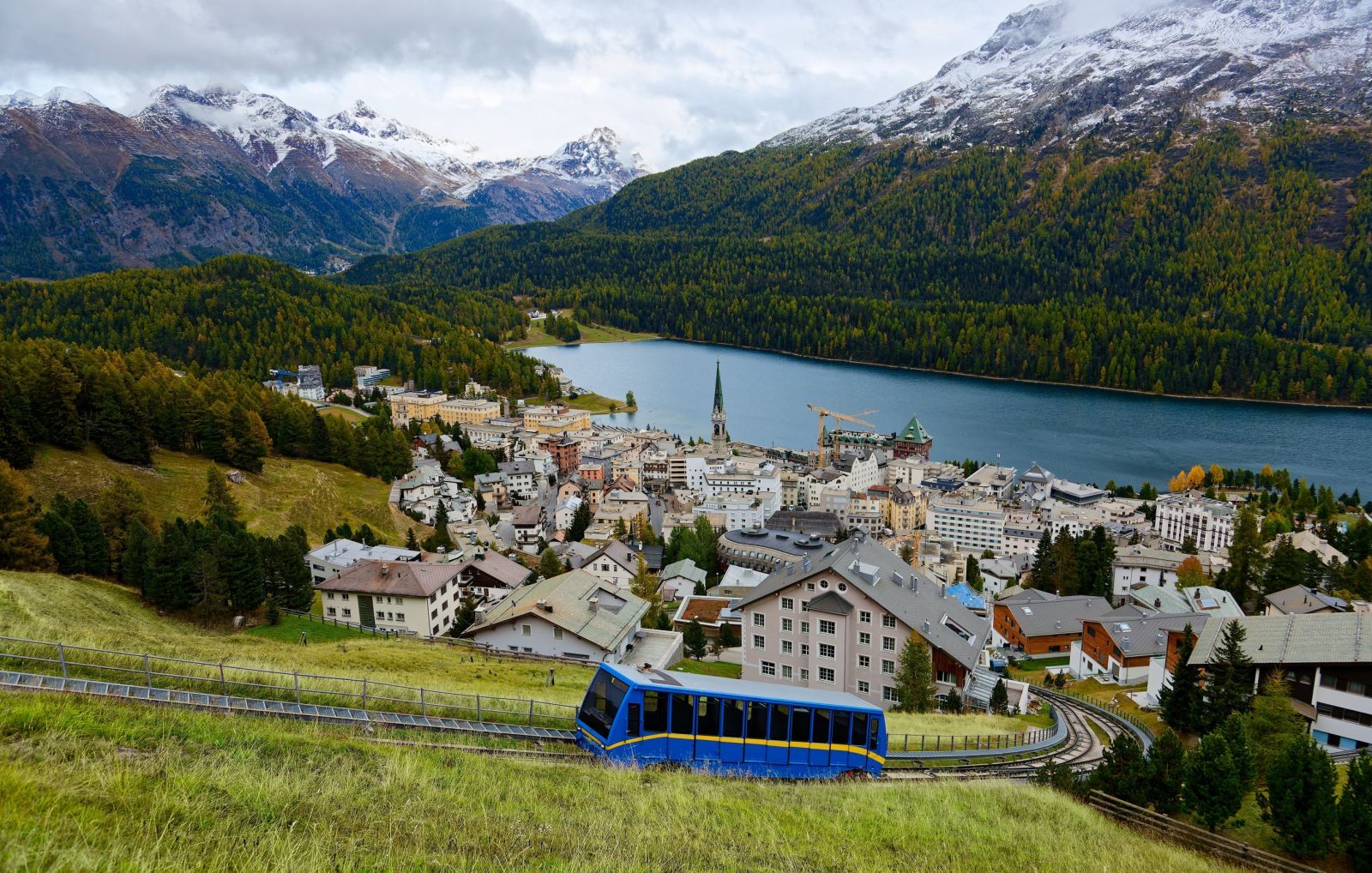
St. Moritz sits at 1,822 metres in the Upper Engadine, on the shore of a lake that freezes solid enough each winter to carry horse races across it.
The town splits into two settlements: St. Moritz-Dorf, built into the hillside above the station, and St. Moritz-Bad, twenty minutes south along the water.
Mineral springs, known and used here for 3,000 years, drew visitors long before anyone thought to ski. The valley itself is unusually wide for the Alps, flattened by a glacier that retreated long ago, leaving room for a town, a lake, and views that run for kilometres in every direction.
Things worth slowing down for
A few of our favourite spots in St. Moritz.
St. Moritz
Stazersee
Zuoz
Zuoz
Guides for St. Moritz
Routes and itineraries curated for St. Moritz.
What makes St. Moritz slow travel perfect
St. Moritz is where Alpine winter tourism began. In 1864, hotelier Johannes Badrutt wagered his English summer guests a free stay if they came back in December and found the season unpleasant. They stayed until Easter. That bet built an industry, and its traces are still visible: the frozen lake below town turns into a stage each February for the White Turf horse races and a polo tournament played on ice, and the Cresta Run, a natural ice track rebuilt from scratch every winter since 1884, still sends riders down headfirst on steel-runnered sledges toward Celerina.
The climate is the reason any of this happened at all. St. Moritz counts around 322 days of sunshine a year, more than almost anywhere else in the country, and locals call the dry air behind that number the champagne climate. It explains the low winter light on the ice and the crowded terraces above town in July, once the skiers are gone and the hikers arrive.
Above the town, Piz Nair rises to 3,056 metres, reachable by cable car, with the full width of the Engadine glacial valley spread out below. The Segantini Museum, built in 1908 on the hillside, holds the largest collection of the painter who spent his final years capturing this light. St. Moritz has hosted the Winter Olympics twice, in 1928 and 1948, and the ice rink and bob run from those years are still in use.