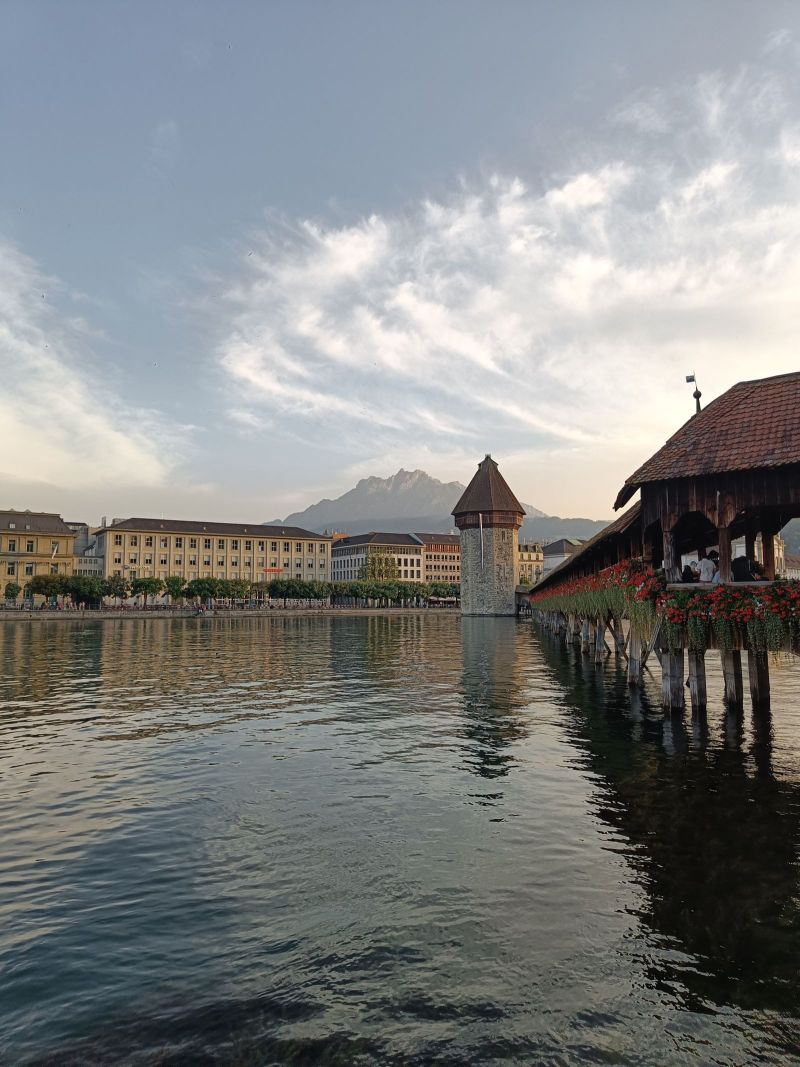
The oldest wooden bridge in Europe, and it's most beautiful when no one else is there.
Jesuit church
Pale rose stucco and a silence that outlasts the crowds on Kapellbrücke.
Jesuitenkirche St. Franz Xaver rises directly from the left bank of the Reuss, five minutes downstream from the Kapellbrücke. Built between 1666 and 1677, it was the first large Baroque church raised in Switzerland, commissioned by the Jesuits who brought the Counter-Reformation to Lucerne. The twin onion domes were not finished until 1893.
Inside, the nave opens into rose and white stucco, a colour scheme rare among Swiss churches and startling in low afternoon light. The high altar looks like marble but is stucco and plaster, shaped to draw the eye upward without excess. A side chapel holds a life-size statue of Brother Klaus, the hermit later canonised as Niklaus von Flüe, dressed in a plain brown habit.
The church still trains organists from the Lucerne School of Music and hosts concerts year-round.
Entry is free, daily from 06:30 to 18:30, later on Mondays and Thursdays.
Usually visited together

Six hundred years of stone, and the whole city laid out below.
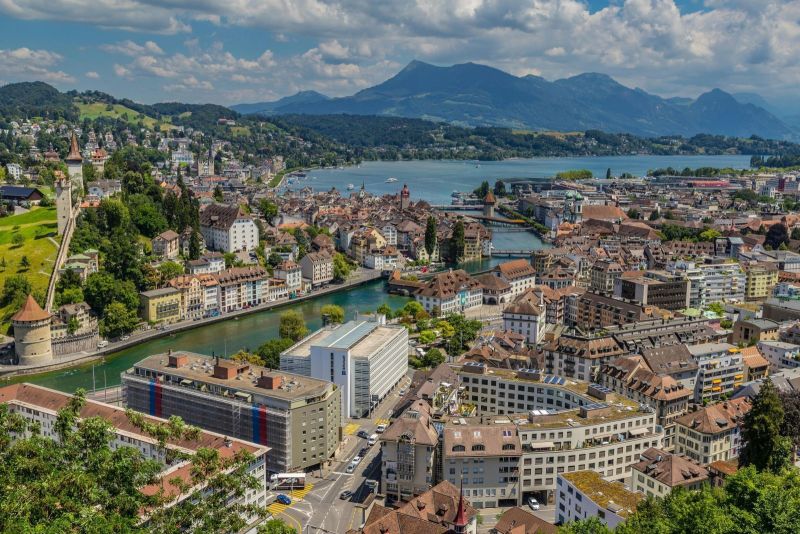
Painted facades, fountain squares, and bread shops that haven't changed in decades.
A pasta counter near the station where the fillings change by the morning.
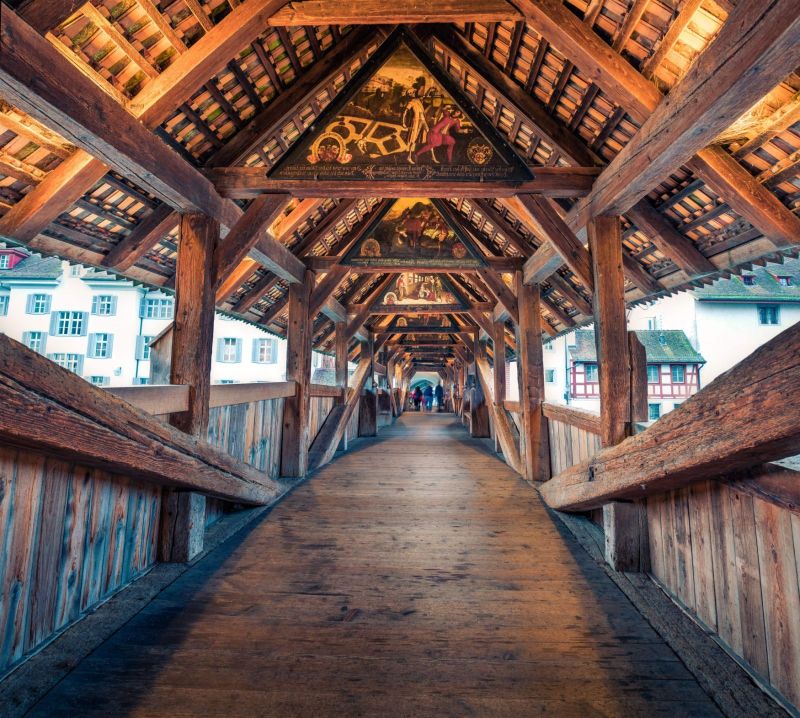
Sixty-seven painted panels above the water, each one a reminder that nobody crosses this river forever.
More in Lucerne
Speed through the forest by day, sleep among its branches by night.
In the glass cabin of the Hammetschwand lift, you ascend 153 meters vertically in less than a minute.
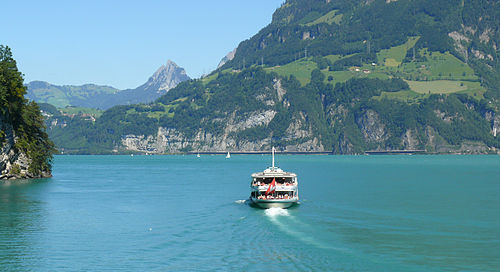
A paddle steamer across water so still it mirrors the mountains.
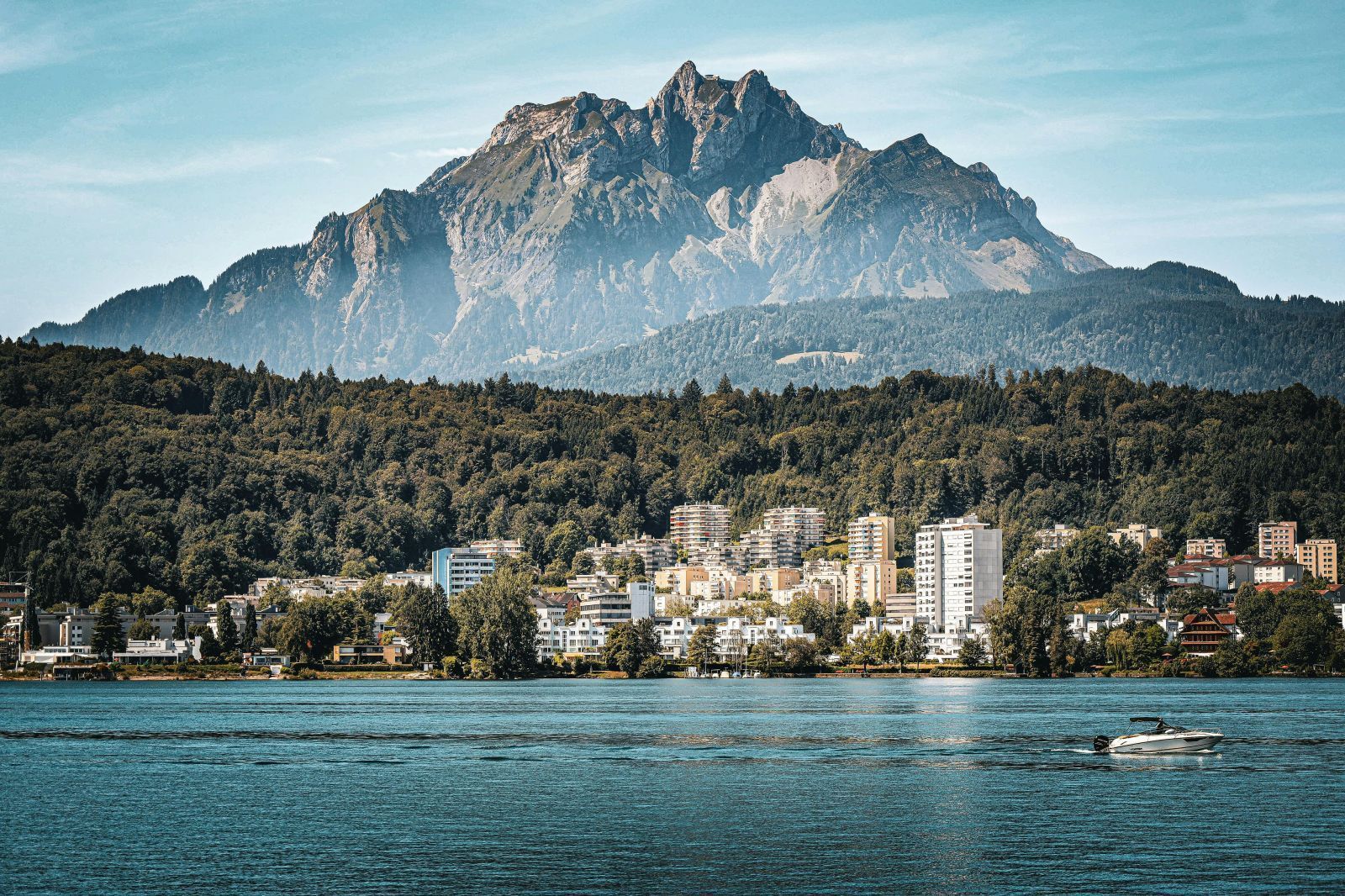
Take the world's steepest cogwheel railway and disappear into the clouds.