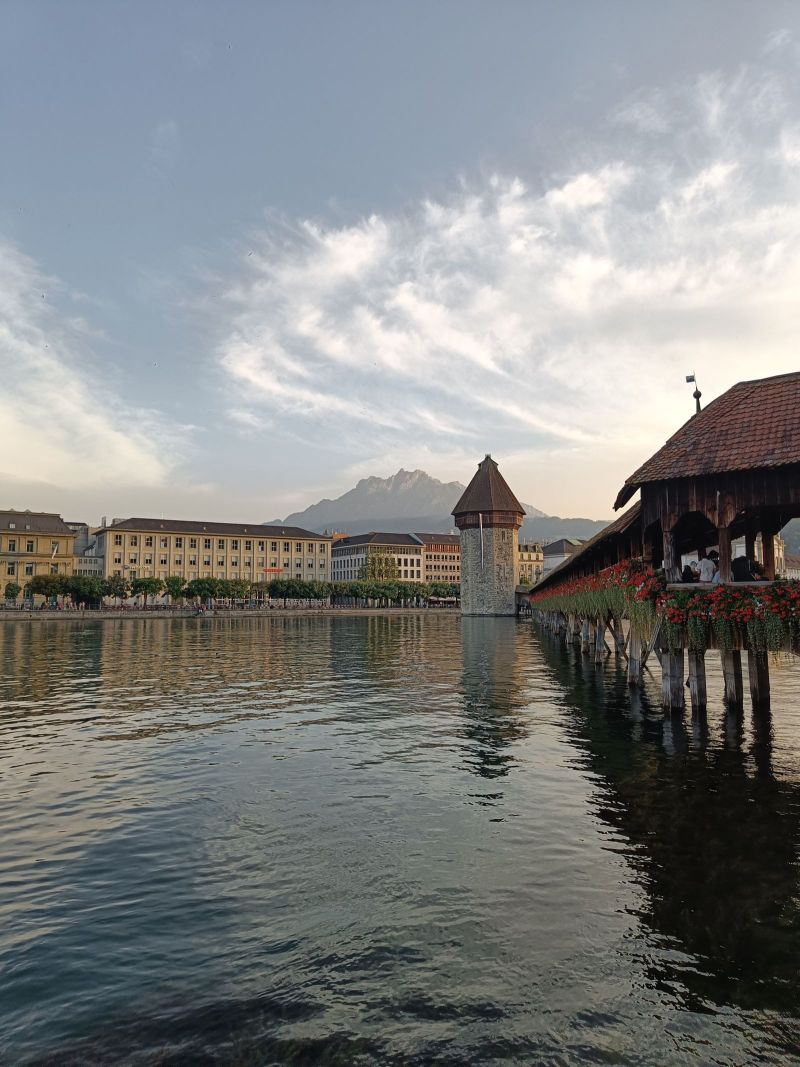
The oldest wooden bridge in Europe, and it's most beautiful when no one else is there.
Spreuerbrücke
Sixty-seven painted panels above the water, each one a reminder that nobody crosses this river forever.
The Spreuerbrücke crosses the Reuss where the river runs fastest, a few hundred meters downstream from the better-known Kapellbrücke. Completed in 1408 as part of Lucerne's fortifications, its southern half is the oldest surviving wooden bridge in Switzerland, a title it inherited after fire destroyed the Kapellbrücke's original structure in 1993.
The name comes from Spreu, chaff: this was the one bridge where the town's millers were permitted to dump grain husks into the water below. A flood destroyed the bridge in 1566, and when it was rebuilt, the town added a granary, the Herrenkeller, into the bridgehead itself. Between 1626 and 1635, the painter Kaspar Meglinger filled the roof beams with 67 panels of the Dance of Death, peasants and popes led by skeletons through the same procession.
Between 1626 and 1635, the painter Kaspar Meglinger filled the roof beams with 67 panels of the Dance of Death, peasants and popes led by skeletons through the same procession.
The bridge is dim, narrow, and largely unvisited compared to its neighbour. Locals still use it to cross the river on the way to somewhere else.
Usually visited together
Pale rose stucco and a silence that outlasts the crowds on Kapellbrücke.

Six hundred years of stone, and the whole city laid out below.
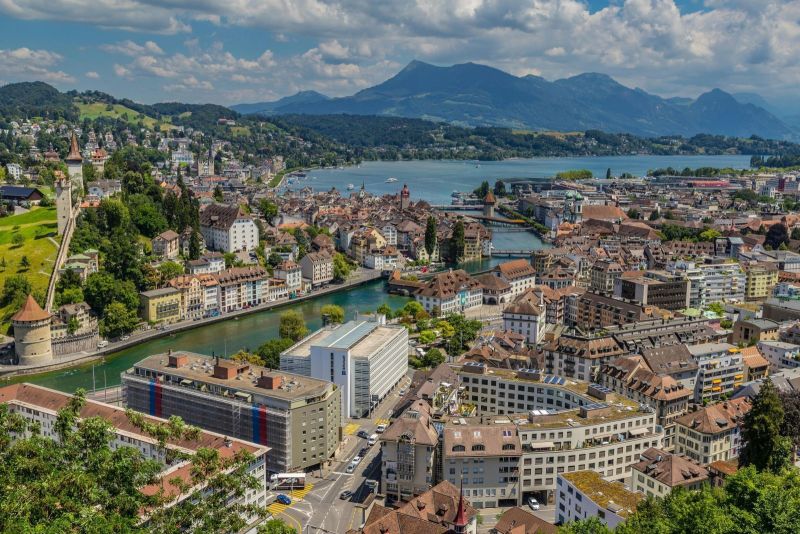
Painted facades, fountain squares, and bread shops that haven't changed in decades.
A pasta counter near the station where the fillings change by the morning.
More in Lucerne
A circle of painted snow that has not stopped falling since 1881.
Gelato eaten with the lake for company.
Touching the locomotives was always allowed.
A dying lion cut into rock, and a hush visitors keep without being told to.